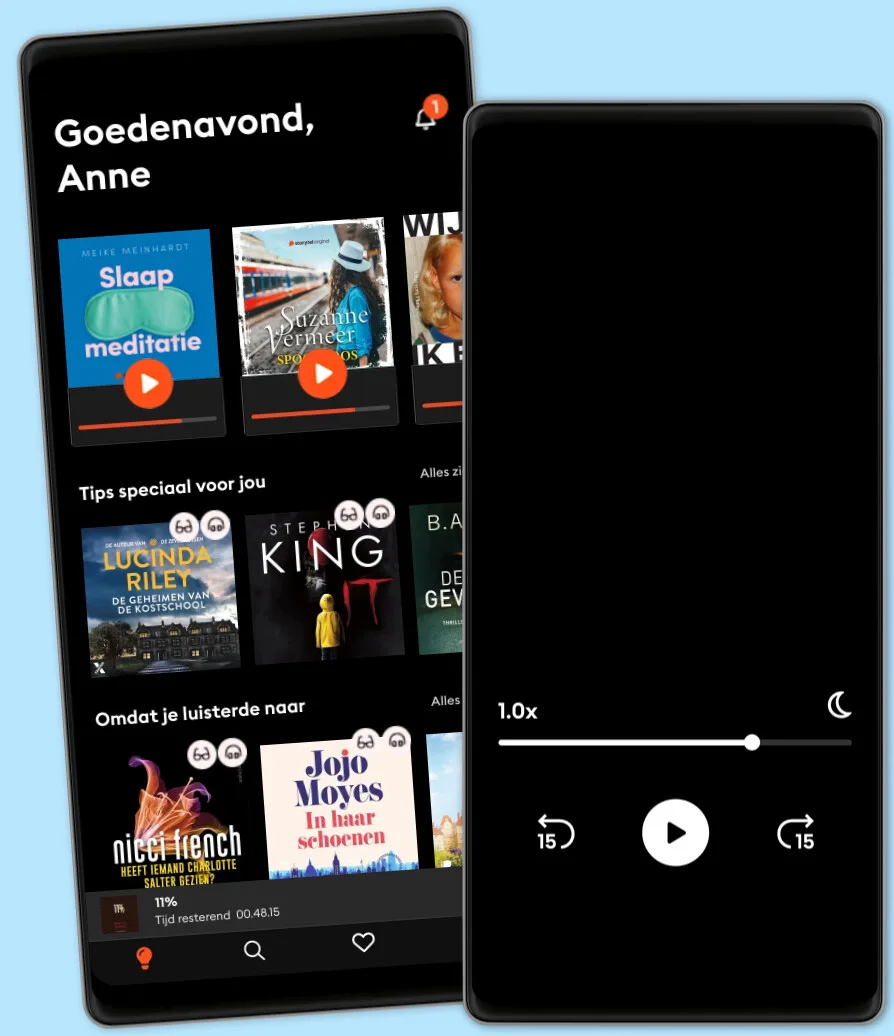
Luister en lees nu 14 dagen gratis

Ontdek Storytel nu 14 dagen gratis. Meer dan 1 miljoen luisterboeken en ebooks in één app.

  • Switch makkelijk tussen luisteren en lezen
  • Elke week honderden nieuwe verhalen
  • Voor ieder een passend abonnement
  • Opzeggen wanneer je maar wilt
Probeer 14 dagen gratis
NL - Details page - Device banner - 894x1036
Cover for Why Don't Students Like School?: A Cognitive Scientist Answers Questions About How the Mind Works and What It Means for the Classroom

Why Don't Students Like School?: A Cognitive Scientist Answers Questions About How the Mind Works and What It Means for the Classroom

28 Beoordeling

4.1

Looptijd
6 Uur 51 min
Taal
Engels
Formaat
Categorie

Non-fictie

Kids are naturally curious, but when it comes to school it seems like their minds are turned off. Why is it that they can remember the smallest details from their favorite television programs, yet miss the most obvious questions on their history test?

Cognitive scientist Dan Willingham has focused his acclaimed research on the biological and cognitive basis of learning and has a deep understanding of the daily challenges faced by classroom teachers. This book will help teachers improve their practice by explaining how they and their students think and learn—revealing the importance of story, emotion, memory, context, and routine in building knowledge and creating lasting learning experiences.

In this breakthrough book, Willingham has distilled his knowledge of cognitive science into a set of nine principles that are easy to understand and have clear applications for the classroom. Some examples of his surprising findings are:

—"Learning styles" don't exist. The processes by which different children think and learn are more similar than different.

—Intelligence is malleable. Intelligence contributes to school performance and children do differ, but intelligence can be increased through sustained hard work.

—You cannot develop "thinking skills" in the absence of facts. We encourage students to think critically, not just memorize facts. However, thinking skills depend on factual knowledge for their operation.

Why Don't Students Like School is a basic primer for every teacher who wants to know how their brains and their students' brains work and how that knowledge can help them hone their teaching skills.

© 2011 Tantor Media (Audioboek): 9781452674193

Verschijnt op

Audioboek: 20 september 2011

Tags

    Anderen genoten ook van...

    1. Epic Measures: One Doctor. Seven Billion Patients.
      Epic Measures: One Doctor. Seven Billion Patients. Jeremy N. Smith
    2. Deep Medicine: How Artificial Intelligence Can Make Healthcare Human Again
      Deep Medicine: How Artificial Intelligence Can Make Healthcare Human Again Eric Topol
    3. How Charts Lie: Getting Smarter about Visual Information
      How Charts Lie: Getting Smarter about Visual Information Alberto Cairo
    4. Once Upon an Algorithm: How Stories Explain Computing
      Once Upon an Algorithm: How Stories Explain Computing Martin Erwig
    5. This is Not Normal: The Politics of Everyday Expectations: The Politics of Everyday Expectations
      This is Not Normal: The Politics of Everyday Expectations: The Politics of Everyday Expectations Cass R. Sunstein
    6. Conformity: The Power of Social Influences
      Conformity: The Power of Social Influences Cass R. Sunstein
    7. Biomimicry: Innovation Inspired by Nature
      Biomimicry: Innovation Inspired by Nature Janine M. Benyus
    8. Survival of the Sickest: A Medical Maverick Discovers Why We Need Disease
      Survival of the Sickest: A Medical Maverick Discovers Why We Need Disease Jonathan Prince
    9. Risk: Why Smart People Have Dumb Accidents - And What We Can Learn From Them
      Risk: Why Smart People Have Dumb Accidents - And What We Can Learn From Them Steve Casner
    10. Getting Gamers: The Psychology of Video Games and Their Impact on the People who Play Them
      Getting Gamers: The Psychology of Video Games and Their Impact on the People who Play Them Jamie Madigan
    11. The Tyranny of Metrics
      The Tyranny of Metrics Jerry Z. Muller
    12. The Age of AI: Artificial Intelligence and the Future of Humanity
      The Age of AI: Artificial Intelligence and the Future of Humanity Jason Thacker
    13. Standard Deviations: Flawed Assumptions, Tortured Data, and Other Ways to Lie with Statistics
      Standard Deviations: Flawed Assumptions, Tortured Data, and Other Ways to Lie with Statistics Gary Smith
    14. Natural Born Learners: Our Incredible Capacity to Learn and How We Can Harness It
      Natural Born Learners: Our Incredible Capacity to Learn and How We Can Harness It Alex Beard
    15. Utopia Is Creepy: And Other Provocations
      Utopia Is Creepy: And Other Provocations Nicholas Carr
    16. Uberland: How Algorithms Are Rewriting the Rules of Work
      Uberland: How Algorithms Are Rewriting the Rules of Work Alex Rosenblat
    17. Ten Short Lessons in Artificial Intelligence and Robotics
      Ten Short Lessons in Artificial Intelligence and Robotics Peter J. Bentley
    18. Rewiring Education: How Technology Can Unlock Every Student's Potential: How Technology Can Unlock Every Student’s Potential
      Rewiring Education: How Technology Can Unlock Every Student's Potential: How Technology Can Unlock Every Student’s Potential John D. Couch
    19. Public Parts: How Sharing in the Digital Age Improves the Way We Work and Live
      Public Parts: How Sharing in the Digital Age Improves the Way We Work and Live Jeff Jarvis
    20. Messy: How to Be Creative and Resilient in a Tidy-Minded World
      Messy: How to Be Creative and Resilient in a Tidy-Minded World Tim Harford
    21. The Silo Effect: The Peril of Expertise and the Promise of Breaking Down Barriers
      The Silo Effect: The Peril of Expertise and the Promise of Breaking Down Barriers Gillian Tett
    22. More From Less: How We Learned to Create More Without Using More
      More From Less: How We Learned to Create More Without Using More Andrew McAfee
    23. Rule Makers, Rule Breakers: How Tight and Loose Cultures Wire Our World
      Rule Makers, Rule Breakers: How Tight and Loose Cultures Wire Our World Michele Gelfand
    24. Why Don't Students Like School?: A Cognitive Scientist Answers Questions About How the Mind Works and What It Means for the Classroom, 2nd Edition
      Why Don't Students Like School?: A Cognitive Scientist Answers Questions About How the Mind Works and What It Means for the Classroom, 2nd Edition Daniel T. Willingham
    25. The Darwin Economy: Liberty, Competition, and the Common Good
      The Darwin Economy: Liberty, Competition, and the Common Good Robert H. Frank
    26. Qualitative Research: A Guide to Design and Implementation, 4th Edition
      Qualitative Research: A Guide to Design and Implementation, 4th Edition Sharan B. Merriam
    27. Deep Learning
      Deep Learning John D. Kelleher
    28. Too Much Information: Understanding What You Don't Want to Know: Understanding What You Don’t Want to Know
      Too Much Information: Understanding What You Don't Want to Know: Understanding What You Don’t Want to Know Cass R. Sunstein
    29. Data Science For Dummies: 2nd Edition
      Data Science For Dummies: 2nd Edition Lillian Pierson
    30. Choosing Not to Choose: Understanding the Value of Choice
      Choosing Not to Choose: Understanding the Value of Choice Cass R. Sunstein
    31. Artificial Intelligence For Dummies
      Artificial Intelligence For Dummies Luca Massaron
    32. Spark: The Life of Electricity and the Electricity of Life
      Spark: The Life of Electricity and the Electricity of Life Timothy J. Jorgensen
    33. Humans Need Not Apply: A Guide to Wealth and Work in the Age of Artificial Intelligence
      Humans Need Not Apply: A Guide to Wealth and Work in the Age of Artificial Intelligence Jerry Kaplan
    34. The Myth of Artificial Intelligence: Why Computers Can’t Think the Way We Do
      The Myth of Artificial Intelligence: Why Computers Can’t Think the Way We Do Erik J. Larson
    35. Everydata: The Misinformation Hidden in the Little Data You Consume Every Day
      Everydata: The Misinformation Hidden in the Little Data You Consume Every Day Mike Gluck
    36. The Complacent Class: The Self-Defeating Quest for the American Dream
      The Complacent Class: The Self-Defeating Quest for the American Dream Tyler Cowen
    37. The Ethical Algorithm: The Science of Socially Aware Algorithm Design
      The Ethical Algorithm: The Science of Socially Aware Algorithm Design Michael Kearns
    38. Work Hard. Be Nice.: How Two Inspired Teachers Created the Most Promising Schools in America
      Work Hard. Be Nice.: How Two Inspired Teachers Created the Most Promising Schools in America Jay Mathews
    39. Shortcut: How Analogies Reveal Connections, Spark Innovation, and Sell Our Greatest Ideas
      Shortcut: How Analogies Reveal Connections, Spark Innovation, and Sell Our Greatest Ideas John Pollack
    40. Fluke: The Math and Myth of Coincidence
      Fluke: The Math and Myth of Coincidence Joseph Mazur
    41. Computational Thinking
      Computational Thinking Peter J. Denning
    42. Cloud Computing
      Cloud Computing Nayan B. Ruparella
    43. Recycling
      Recycling Finn Arne Jorgensen
    44. Louder Than Words: The New Science of How the Mind Makes Meaning
      Louder Than Words: The New Science of How the Mind Makes Meaning Benjamin K. Bergen
    45. This Will Make You Smarter: New Scientific Concepts to Improve Your Thinking
      This Will Make You Smarter: New Scientific Concepts to Improve Your Thinking John Brockman
    46. Liars: Falsehoods and Free Speech in an Age of Deception: Falsehoods and Free Speech in an Age of Deception
      Liars: Falsehoods and Free Speech in an Age of Deception: Falsehoods and Free Speech in an Age of Deception Cass R. Sunstein
    47. This Explains Everything: Deep, Beautiful, and Elegant Theories of How the World Works
      This Explains Everything: Deep, Beautiful, and Elegant Theories of How the World Works John Brockman
    48. Data For the People: How to Make Our Post-Privacy Economy Work for You
      Data For the People: How to Make Our Post-Privacy Economy Work for You Andreas S. Weigend
    49. Small Teaching: Everyday Lessons from the Science of Learning
      Small Teaching: Everyday Lessons from the Science of Learning James M. Lang
    50. fMRI
      fMRI Peter A. Bandettini
    51. The Perfect Bet: How Science and Math Are Taking the Luck Out of Gambling
      The Perfect Bet: How Science and Math Are Taking the Luck Out of Gambling Adam Kucharski
    52. Team Human
      Team Human Douglas Rushkoff
    53. The Formula: How Algorithms Solve all our Problems... and Create More
      The Formula: How Algorithms Solve all our Problems... and Create More Luke Dormehl
    54. The Invisible Gorilla: And Other Ways Our Intuition Deceives Us
      The Invisible Gorilla: And Other Ways Our Intuition Deceives Us Christopher Chabris
    55. The Importance of Being Interested: Adventures in Scientific Curiosity
      The Importance of Being Interested: Adventures in Scientific Curiosity Robin Ince
    56. Thinking Better: The Art of the Shortcut
      Thinking Better: The Art of the Shortcut Marcus du Sautoy
    57. Big Data Revolution: What farmers, doctors and insurance agents teach us about discovering big data patterns
      Big Data Revolution: What farmers, doctors and insurance agents teach us about discovering big data patterns Rob Thomas
    58. New Laws of Robotics: Defending Human Expertise in the Age of AI
      New Laws of Robotics: Defending Human Expertise in the Age of AI Frank Pasquale
    59. The Virility Paradox: The Vast Influence of Testosterone on Our Bodies, Minds, and the World We Live In
      The Virility Paradox: The Vast Influence of Testosterone on Our Bodies, Minds, and the World We Live In Charles J. Ryan
    60. Fooled by the Winners: How Survivor Bias Deceives Us
      Fooled by the Winners: How Survivor Bias Deceives Us David Lockwood
    61. What Should We Be Worried About?: Real Scenarios That Keep Scientists Up at Night
      What Should We Be Worried About?: Real Scenarios That Keep Scientists Up at Night John Brockman
    62. How We Eat: The Brave New World of Food and Drink
      How We Eat: The Brave New World of Food and Drink Paco Underhill
    63. Future Histories: What Ada Lovelace, Tom Paine, and the Paris Commune Can Teach Us About Digital Technology
      Future Histories: What Ada Lovelace, Tom Paine, and the Paris Commune Can Teach Us About Digital Technology Lizzie O'Shea
    64. Maths on the Back of an Envelope: Clever ways to (roughly) calculate anything
      Maths on the Back of an Envelope: Clever ways to (roughly) calculate anything Rob Eastaway
    65. Infinite Powers: How Calculus Reveals the Secrets of the Universe
      Infinite Powers: How Calculus Reveals the Secrets of the Universe Steven Strogatz
    66. The New Localism: How Cities Can Thrive in the Age of Populism
      The New Localism: How Cities Can Thrive in the Age of Populism Bruce Katz
    67. Memes: In Digital Culture
      Memes: In Digital Culture Limor Shifman
    68. The Misinformation Age: How False Beliefs Spread
      The Misinformation Age: How False Beliefs Spread Cailin O’Connor
    69. The Theory That Would Not Die: How Bayes' Rule Cracked the Enigma Code, Hunted Down Russian Submarines, and Emerged Triumphant from Two Centuries of Controversy
      The Theory That Would Not Die: How Bayes' Rule Cracked the Enigma Code, Hunted Down Russian Submarines, and Emerged Triumphant from Two Centuries of Controversy Sharon Bertsch McGrayne
    70. High Price: A Neuroscientist's Journey of Self-Discovery That Challenges Everything You Know About Drugs and Society
      High Price: A Neuroscientist's Journey of Self-Discovery That Challenges Everything You Know About Drugs and Society Carl Hart
    71. A Curious Mind: The Secret to a Bigger Life
      A Curious Mind: The Secret to a Bigger Life Charles Fishman
    72. How Change Happens
      How Change Happens Cass R. Sunstein
    73. The Deep Learning Revolution
      The Deep Learning Revolution Terrence J. Sejnowski
    74. Being Wrong: Adventures in the Margin of Error
      Being Wrong: Adventures in the Margin of Error Kathryn Schulz
    75. Move Fast and Break Things: How Facebook, Google, and Amazon Have Cornered Culture and What It Means For All Of Us
      Move Fast and Break Things: How Facebook, Google, and Amazon Have Cornered Culture and What It Means For All Of Us Jonathan Taplin
    76. Search: How the Data Explosion Makes Us Smarter
      Search: How the Data Explosion Makes Us Smarter Stefan Weitz
    77. Changing Minds: How Aging Affects Language and How Language Affects Aging
      Changing Minds: How Aging Affects Language and How Language Affects Aging Roger Kreuz
    78. Aesthetic Intelligence: How to Boost It and Use It in Business and Beyond
      Aesthetic Intelligence: How to Boost It and Use It in Business and Beyond Pauline Brown
    79. An Elegant Defense: The Extraordinary New Science of the Immune System: A Tale in Four Lives
      An Elegant Defense: The Extraordinary New Science of the Immune System: A Tale in Four Lives Matt Richtel
    80. Neuropolis: A Brain Science Survival Guide
      Neuropolis: A Brain Science Survival Guide Robert Newman
    81. Where Are We Heading?: The Evolution of Humans and Things
      Where Are We Heading?: The Evolution of Humans and Things Ian Hodder
    82. The Age of Living Machines: How Biology Will Build the Next Technology Revolution: How the Convergence of Biology and Engineering Will Build the Next Technology Revolution
      The Age of Living Machines: How Biology Will Build the Next Technology Revolution: How the Convergence of Biology and Engineering Will Build the Next Technology Revolution Susan Hockfield
    83. Adapt: Why Success Always Starts with Failure
      Adapt: Why Success Always Starts with Failure Tim Harford
    84. More From Less: The surprising story of how we learned to prosper using fewer resources – and what happens next
      More From Less: The surprising story of how we learned to prosper using fewer resources – and what happens next Andrew McAfee
    85. Robot-Proof: Higher Education in the Age of Artificial Intelligence
      Robot-Proof: Higher Education in the Age of Artificial Intelligence Joseph E. Aoun
    86. How Minds Change: The New Science of Belief, Opinion and Persuasion
      How Minds Change: The New Science of Belief, Opinion and Persuasion David McRaney
    87. Cultural Intelligence: Surviving and Thriving in the Global Village
      Cultural Intelligence: Surviving and Thriving in the Global Village Kerr C. Inkson

    Maak je keuze:

    • Voor ieder een passend abonnement

    • Kies het aantal uur en accounts dat bij jou past

    • Download verhalen voor offline toegang

    • Kids Mode - een veilige omgeving voor kinderen

    Meest gekozen

    Unlimited

    Voor wie onbeperkt wil luisteren en lezen.

    €13.99 /30 dagen

    14 dagen gratis
    • Meer dan 1 miljoen luisterboeken en ebooks

    • Altijd opzegbaar

    Probeer 14 dagen gratis

    Premium

    Voor wie zo nu en dan wil luisteren en lezen.

    €9.99 /30 dagen

    14 dagen gratis
    • Meer dan 1 miljoen luisterboeken en ebooks

    • Altijd opzegbaar

    Probeer 7 dagen gratis

    Flex

    Voor wie Storytel wil proberen.

    €7.99 /30 dagen

    • Spaar ongebruikte uren op tot 50 uur

    • Meer dan 1 miljoen luisterboeken en ebooks

    • Altijd opzegbaar

    Begin nu

    Family

    Voor wie verhalen met familie en vrienden wil delen.

    Vanaf €18.99 /maand

    14 dagen gratis
    • Meer dan 1 miljoen luisterboeken en ebooks

    • Altijd opzegbaar

    Jij + 1 familielid2 accounts

    €18.99 /30 dagen

    Probeer 14 dagen gratis

